"One more day closer to free diving and kitesurfing."
Cockpit Dashboard 🚀
Strength
High-intensity block. The app will tolerate lower volume but watch fatigue and tendon load.
Athlete OS Decision
Phase 1 - Excavation & Structural Armor.
GREEN
45-60 min Zone 2 bike, row, swim, or walk/jog plus tendon armor.
Readiness--
Running ShieldShield active
Nutrition Target2000 kcal / 200g protein
ACWRBaseline pending
Avoid Today
Recovery Instruction
Green recovery: train, but stay inside Phase 1 rules.
Why
Post-Workout Check
Minimum Effective Dose
Full planned session is allowed inside Phase 1 rules.
Phase Gate
Stay in Phase 1 until transition checks are ready.
Alert Ledger
ACWR
—
WBGT
—
TDEE
—
Fatigue
—
Cardio Volume
0m
Lift Focus
Rest
🟢
Interference Shield
Cleared to lift heavy.
🟢
Tendon Load
Tendons are recovering well.
🟢
Heat & Catabolic State
Fueling is adequate.
🟢
Nutrition Adherence
Phase 1 targets met.
🟢
ACWR Load Status
Load ratio is optimal.
⚪
Adaptation Velocity
Log body fat % to enable velocity tracking.
🟢
Cognitive Load Shield
Cognitive load within tolerance.
🟢
Thermal Strain Shield
Conditions safe for intense effort.
🟢
Gear Wear Status
No gear tracked.
Weekly Review
Clear next action from load, pain, Zone 2, nutrition, and tendon armor.
continue
⛰️ Way to 95
Start: 119.6Current: --Goal: 95.0
First Drop: 115 kg
Shedding initial water & bloat
Centurion Approach: 110 kg
Entering double-digit territory soon
Halfway Mark: 105 kg
Substantial physiological changes
Double Digits: 100 kg
A major psychological barrier broken
Ultimate Goal: 95 kg
Prime athletic conditioning achieved
Strava Activity Inbox
Objective cardio lands here. You only add RPE, pain, fueling, and optional notes.
Imported0
Needs Check0
Last SyncNot synced
Phase 2 bridge: the frontend inbox is live; full OAuth token refresh stays in the passive backend so the Strava client secret never ships to the browser.
ConnectionNot connected
No imported activities yet. Sync will pull recent cloud rows and rebuild from local Strava/Intervals fields.
🧠 Subjective Truth
1 = Deep work/flow. 5 = Burnout deadlines, context switching.
🌙 Recovery & Sleep
📝 Daily Wellness Check-In
Quick subjective snapshot. Rate each area 1-5.
TerribleGreat
BloatedPerfect
StiffFluid
LowHigh
⚕️ Granular Injury Tracker
🏋️♂️ Strength & Structure
Session: None
No gym session planned for today.
Movement Quality Flags
💊 Pharmacology & Stims
🔍Analyzing tendon load...
🔍Analyzing fueling...
🔍Analyzing endocrine stress...
💊 Daily Supplements
Track supplements and timing. Tap to toggle.
Loading supplements...
⚖️ InBody Metrics
Log your body composition scan results.
🏃♂️ Manual Cardio (Strava Fallback)
Use this if the automated Strava integration fails.
🧪 Ultra-Endurance Armor
🍎 Nutrition (Manual)
Fallback since FatSecret API is locked.
🩸 Quarterly Biomarker Vault
Input blood lab results to ensure endocrine/iron health.
Fatigue vs. Load
7-Day trailing ratio of CNS Fatigue against Strava Effort.
Subjective Readiness
HRV vs. Load
Injury Tracker
Pain scaling over time for isolated areas.
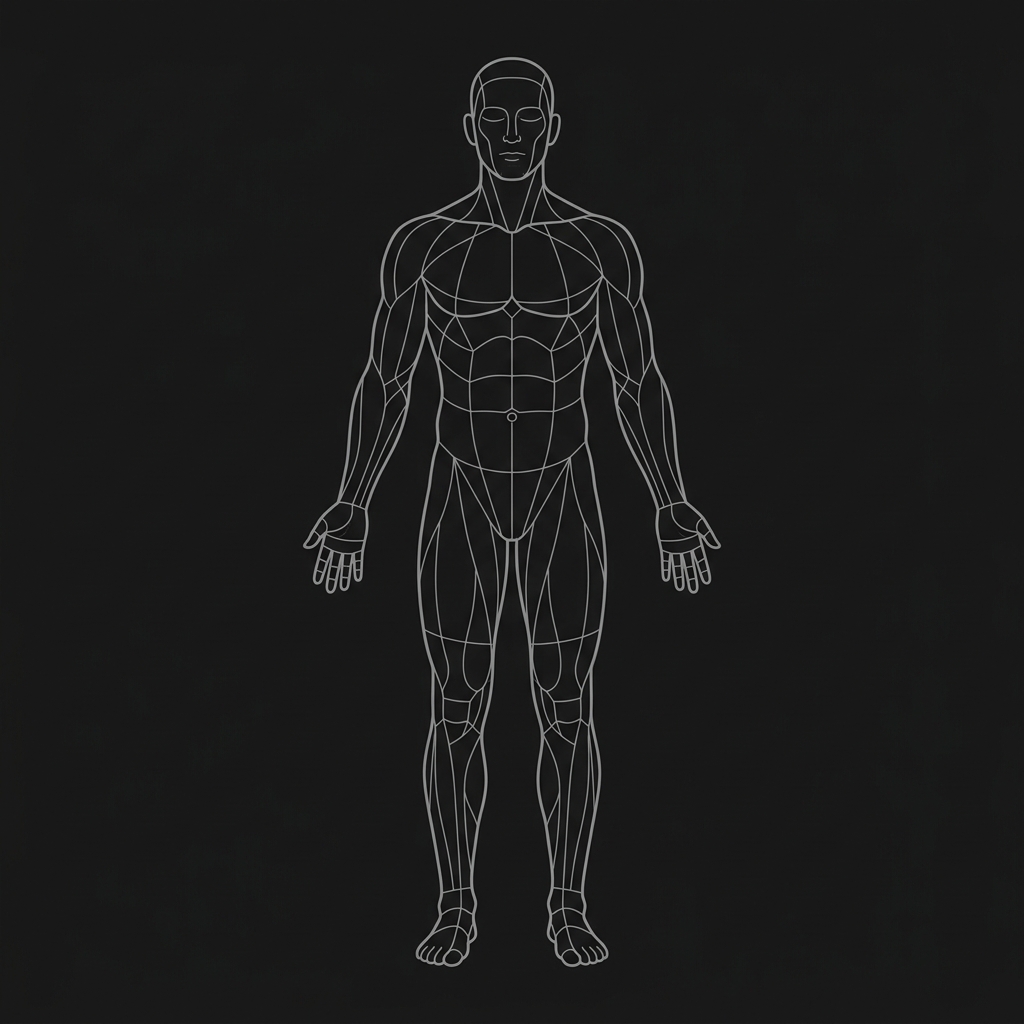
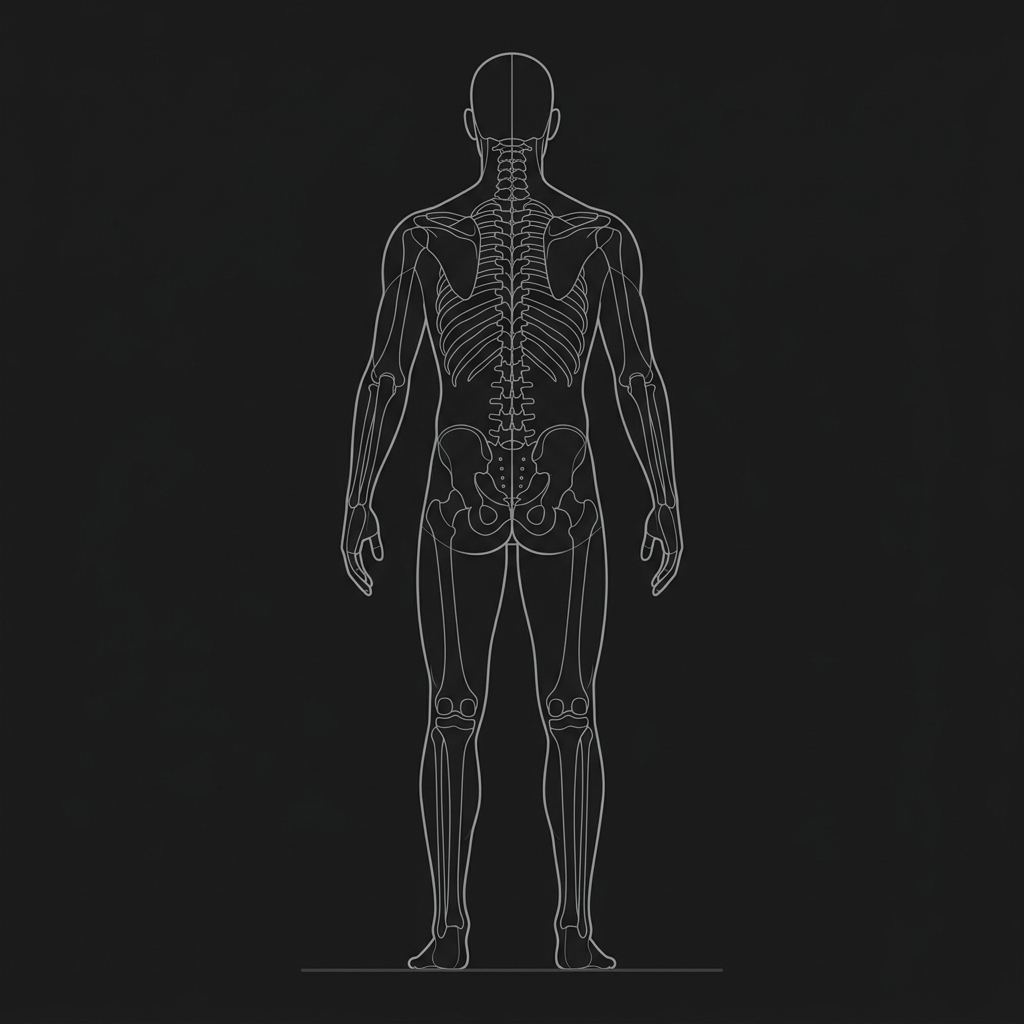
Joint Armor Heatmap
14-day spatial pain map. Red intensity = max pain at that joint.
Joint Armor Status (14-Day Max)
8-10 Critical
5-7 Moderate
1-4 Mild
0 / No Data
Hover joints for location & pain score. Red intensity = max pain over trailing 14 days.
Mental vs. Physical Stress
Cognitive load (1-5) mapped against objective training strain. Red = high stress days.
Aerobic Decoupling (EF)
Pace vs. HR over 30 days. Validating Zone 2 base building.
Cardio Modality
Heavy Lifts
Volume vs. Joint Pain
Finding the MRV limit before tendons flare up.
Metabolic Adaptation
Weight vs. Calculated TDEE over 90 days.
Macro Nutrition Stack
Trailing 7-day intake of Carbs, Protein, and Fats.
Body Composition Progress
Weight, Body Fat %, and Muscle Mass % tracked over time.
Manipulation of energy pathways (ATP-PCr, Glycolysis, Aerobic) to maximize continuous force output and base endurance.
ATP-PCr (Phosphagen System)
Timeline: 0–15 seconds. Pure explosive power (heavy deadlifts, short sprints). Uses stored muscle energy, requires no oxygen.
Anaerobic Glycolysis (Glycolytic System)
Timeline: 15 seconds to 2 minutes. High-intensity interval territory. Burns carbohydrates without oxygen, generating lactate and acidic hydrogen (H+) ions that cause muscular failure.
Oxidative Pathway (Aerobic System)
Timeline: 2 minutes to 15+ hours. The fundamental driver of endurance. Oxidizes fats and glycogen inside cellular structures in the presence of oxygen.
The Lactate Shuttle Protocol
Lactate is a premium carbohydrate substrate. Zone 2 training builds slow-twitch muscle fibers with high MCT1 transporter density. This transforms your slow-twitch base into a biological "vacuum" that sucks up and burns metabolic byproducts of intense lifting for continuous ATP.
Pillars
Pillar 2: Respiration & The Aerobic Ceiling
Maximize cardiovascular volume and heart stroke capacity using the Fick Equation.
Fick Equation
VO2 Max = Q × Δa-vO2. Where Q represents Maximal Cardiac Output (Stroke Volume × HR) and Δa-vO2 represents peripheral oxygen extraction.
Hydrostatic Stress
Slow training increases chamber compliance, but severe-intensity intervals (90%+ max HR) are required to drive hydrostatic stress and left-ventricle eccentric remodeling, making the heart larger and stronger.
The Operational Rule
Allocate 10% to 15% of weekly cardiovascular duration to severe, high-intensity intervals (e.g. 4-minute maximum-effort cycling or rowing repeats separated by active recovery).
Pillars
Pillar 3: Neuromuscular Drive (Strength without Mass)
Avoid non-functional hypertrophy (dead weight) by training myofibrillar pathways over sarcoplasmic ones.
Sarcoplasmic Hypertrophy (The Pump)
Moderate loads (8–15 reps), short rest. Accumulates fluid volume, non-contractile proteins, and glycogen in muscle sarcoplasm. Increases mass without proportional force gains.
Myofibrillar Adaptation (Dense Strength)
High-intensity loads (1–5 reps), long rest. Increases volume and density of actin and myosin contractile elements. Elevates pound-for-pound power while leaving systemic mass unaltered.
Henneman's Size Principle
Lifting ultra-heavy loads (≥85% 1RM) overrides sequential motor unit recruitment, forcing the central nervous system to fire high-threshold Type IIx fibers synchronously from the first millimeter of movement.
The Strength Programming Rule
Execute free-weight and machine compound movements using heavy loads strictly at or above 85% of your 1-Repetition Maximum (1RM). Restrict sets to 1 to 5 highly explosive repetitions, and enforce 3 to 5 minutes of complete passive recovery between sets.
Pillars
Pillar 4: Biological Conflict & The Interference Effect
Manage molecular signal competition between the anabolic mTORc1 pathway and the catabolic AMPK pathway.
mTORc1 Pathway
Activated via intense mechanical tension and high amino acid concentrations. Primary switch for building dense muscle proteins.
AMPK Pathway
Triggered via acute glycogen depletion, high intracellular calcium levels, and metabolic stress during endurance. Drives mitochondrial biogenesis (PGC-1α).
The Conflict & The 4-Hour Rule
When heavily activated, AMPK acts as a direct molecular inhibitor of the mTORc1 pathway. Cardio immediately after lifting shuts down strength-building signals. You must separate your high-volume cardio and your heavy neural strength sessions by an absolute minimum window of 4 hours (ideally 6 to 24 hours). Always execute cardio first if doing two-a-days.
Pillars
Pillar 5: Muscle Preservation & Nutrition Timing
Prevent muscle tissue breakdown (gluconeogenesis) via proper fueling timing during endurance sessions.
Gluconeogenesis
When glycogen is critically depleted (sessions >75-90 minutes), the liver breaks down existing skeletal muscle tissue into free amino acids to convert them into glucose for survival.
The 50-Minute Rule
Cardiovascular training sessions restricted to under 50–70 minutes pose zero threat of muscle cannibalization. Glycogen stores are fully capable of supplying this timeline.
The Post-Cardio Reset Window
Within 15 to 30 minutes of completing cardio, you must consume high-glycemic carbs and rapid-acting protein. This generates an insulin spike that suppresses cortisol and stops gluconeogenesis.
Intra-Workout Fueling
For planned sessions >75 minutes, ingest liquid carbs at a rate of 30 to 60 grams per hour to feed the blood glucose pool directly.
Pillars
Pillar 6: The Chassis (Joint Armor & Tendon Theory)
Active joint mobility vs. passive flexibility, and tendon growth via mechanotransduction.
Flexibility vs. Mobility
Flexibility is passive range of motion. Mobility is active structural control and force production at end-ranges. High passive flexibility combined with weak active mobility creates severe joint instability.
Mechanotransduction
Tendons have extremely low blood flow and adapt at a fraction of muscle speed. Tendons strengthen exclusively via mechanotransduction—cells converting physical tension into collagen synthesis.
Pillars
Pillar 7: The Stress Bucket (Autonomic Balance)
Balance the Autonomic Nervous System (ANS) seesaw of Sympathetic and Parasympathetic states.
Systemic Stress Reservoir
Your body cannot separate training stress from life anxiety. All stressors dump into a shared reservoir. The body cannot repair connective tissue or synthesize new proteins while stuck in a Sympathetic (fight or flight) state.
HRV Operational Rule
Track Heart Rate Variability (HRV) daily. A high HRV indicates parasympathetic dominance (ready for load). A suppressed HRV reveals a fried sympathetic state (pull back heavy neural lifting, keep cardio light).
Pillars
Pillar 8: Macro-Periodization
Block Periodization structure to manage opposing training adaptations without overtraining.
Phase 1: Base & Structural Architecture
Volume Split: 70% Zone 2 Cardio / 20% Mobility & Tendon / 10% HIIT. Strength Target: Low-volume, ultra-heavy compounds to maintain nervous system motor patterns.
Phase 2: Neural Strength & Aerobic Ceiling
Volume Split: 50% Zone 2 Cardio / 30% Pure Neural Strength (1-5 reps at 85%+) / 20% VO2 max intervals. Strength Target: Force absolute nervous system adaptations.
Phase 3: Specific Endurance & Race Execution
Volume Split: 80% Sport-Specific / 20% Minimalist Lifting. Strength Target: Minimalist maintenance dose to focus all energy on race capacity.
Playbook
Heavy Isometrics (Pain-Killer Protocol)
Analgesic holds for tendon pain management and parallel alignment of collagen fibers.
The Science
Isometric holds (contracting without moving) act as an analgesic (painkiller) for irritated tendons while forcing chaotic collagen fibers to align perfectly parallel.
Prescription
4 sets of 45-second holds. 2-minute rest between sets. You must use heavy weight; body weight is not enough. 2–3 times a week.
Application
Weighted Single-Leg Calf Raise Holds (Achilles). Heavy Spanish Squats or Wall Sits (Patellar Tendon). Heavy kettlebell bottoms-up holds (Rotator Cuff).
Playbook
Heavy Slow Resistance (Cable Builder)
Stimulate actual tendon thickening and collagen structure growth.
The Science
Tendons require heavy loads moving very slowly to stimulate actual tissue growth and thickening. This protocol is superior to high-rep, light-weight rehab.
Prescription
3 to 4 sets of 6–8 reps. Tempo is non-negotiable: 3 seconds down (eccentric) and 3 seconds up (concentric). Twice a week at the end of strength days.
Application
ATG Split Squats or slow Leg Extensions. Weighted heel drops off a stair. Heavy, slow chin-up negatives (for the swim stroke).
Playbook
Plyometrics (Spring Architecture)
Build rigid mechanical spring stiffness in Achilles and plantar fascia.
The Science
You want your Achilles and plantar fascia to act as dense, highly rigid mechanical springs that instantly bounce back up to 50% of your running impact energy.
Prescription
Low volume, extreme intent. Ground contact time must be a fraction of a second. 2 times a week, before your nervous system is fatigued.
Application
Pogo Jumps (3 sets of 15-20s, stiff knees). Depth Drops (3 sets of 5 reps off a 12-18 inch box, sticking the landing instantly).
Playbook
Active Joint Mobility (Chassis Greaser)
Morning or warm-up routine to build active control at end-ranges.
The Science
Passive stretching is useless for injury prevention. You must build muscular control at the absolute end-ranges of your joints. Perform every single morning or as your pre-workout dynamic warm-up.
Thoracic Spine
T-Spine Rotations and Cat-Cow variations. Reverses upper-torso slouching caused by sitting at the coding desk all day. Critical for rowing and swimming.
Hips
90/90 Hip Switches and End-Range Liftoffs (sit in a deep stretch and physically lift your foot off the ground using hip rotators). Essential for running/cycling power.
Ankles
Knee-to-wall ankle glides. Maximizes squat depth and optimizes land running gait mechanics.
Roadmap
Target InBody Signature Database
Height 173cm, Age 22 target signatures for hybrid athletic success.
Target Calibration (Height: 173cm, Age: 22)
Because your goal is high neural strength mixed with extreme multi-sport endurance, targets deviate from standard medical charts. We aim for minimized land-strike friction but heavy capacity.
Metric
Baseline
Phase 1 Target
Ultimate Target
Total Weight
116 kg
~95 kg
78-82 kg (Optimized)
Body Fat (PBF)
33%
≤ 22% (Excavation)
12%-15% (Elite)
Muscle (SMM)
29 kg
Maintain Weight
36-38 kg (Dense)
SMM % of Total
25.0%
~31.0%-33.0%
45.0%-48.0% (Sweet Spot)
Water (TBW)
48.0%
> 50.0% (Base Floor)
60.0%-65.0% (Shield)
The Bio-Impedance Reality Check
Do not confuse fluid drops with actual tissue loss. High deficits drop muscle glycogen. Since 1g glycogen binds to 3g water, muscles rapidly dump water. InBody scans will misread this as severe muscle loss. If lift numbers remain stable, ignore the machine's muscle warning—it is a fluid illusion.
Roadmap
Phase 1: Excavation & Structural Armor
Current state down to 22% Body Fat / ~95 kg total mass.
What It Does
Acts as a structural overhaul block. Maximizes fat tissue breakdown using non-impact cardiovascular engines (Cycling, Rowing, Swimming) while building dense connective tissue stiffness (tendon armor) and heavy neural output.
Why We Do It
Fat Oxidation Over Muscle Cannibalization: Zone 2 cardio develops fat-burning enzymes without systemic exhaustion. Lifting in the 1–5 rep range forces motor unit firing, signaling that muscle mass is mandatory for survival.
Shielding the Chassis from Weight Physics: Running at 116 kg drops ~348 kg of force per step on joints. Non-impact cardio builds capacity, while Heavy Slow Resistance (HSR) and Isometrics physically thicken tendons.
Roadmap
Phase 2: Neural Power & Aerobic Ceiling
Triggered once weight drops below 95 kg and joint integrity is verified.
What It Does
Shifts physiological priorities from structural safety to maximizing raw horsepower and metabolic speed. Pushes oxygen consumption limits (VO2 max), elevates skeletal force production, and advances walk/jog intervals into a continuous 10k progression.
Why We Do It
Lifting the Aerobic Pyramid: Severe-intensity interval circuits produce high internal pressure, forcing cardiac remodeling—expanding and strengthening the heart's left ventricle to pump more blood.
Hacking Your Cadence Economy: At lighter weights, joints can accept high-velocity impacts. Plyometrics and maximal neural lifts boost Rate of Force Development (RFD), programming the motor cortex to fire fibers instantly.
Roadmap
Phase 3: Specific Endurance & Race Execution
The final 4–6 weeks leading directly into a target event (10k, Hyrox, or Triathlon).
What It Does
A sport-specific tuning block. Drops heavy gym lifting to a bare minimalist maintenance dose (preserving neural drive) and funnels 80% of adaptive energy into pacing profiles, nutrition timing, and transitions.
Why We Do It
Managing Stress Bucket Capacity: Gym lifting volume is cut to prevent overloading the Sympathetic pathway, allowing full recovery and maintaining sleep architecture.
Defeating Gluconeogenesis: Rehearsal of exact intra-workout carb ingestion (30–60g per hour) to feed the blood glucose pool, suppressing cortisol spikes and protecting muscle tissue on the race course.
Rules
The 4-Hour Separation Rule
Critical timing guideline to prevent the catabolic AMPK pathway from blunting mTORc1 strength adaptations.
The Conflict
Endurance training triggers AMPK (mitochondrial biogenesis). Lifting triggers mTORc1 (muscle protein synthesis). Activated AMPK acts as a direct molecular inhibitor of the mTORc1 pathway. Doing them back-to-back destroys the strength adaptation.
The Separation Rule
RuleSeparate high-volume cardio and heavy neural strength sessions by an absolute minimum window of 4 hours (ideally 6 to 24 hours). If performing two-a-days, always execute the cardiovascular session first.
Rules
Endurance Fueling & The 50-Minute Rule
Prevent muscle tissue breakdown (gluconeogenesis) via carbohydrate ingestion and timing.
The 50-Minute Rule
Cardio sessions under 50–70 minutes pose zero threat of muscle cannibalization. Intramuscular and hepatic glycogen stores are fully capable of supplying this timeline.
The Post-Cardio Reset Window
Within 15 to 30 minutes of completing cardio, consume high-glycemic carbohydrates and rapid-acting protein. This generates an insulin spike that suppresses cortisol, stops gluconeogenesis, and drives nutrients directly back into muscle.
Intra-Workout Fueling Protocol
For any planned session extending beyond 75 minutes, ingest liquid carbs at a rate of 30 to 60 grams per hour to feed the blood glucose pool, preventing the liver from breaking down skeletal muscle.
Rules
Daily Systems Check
5-step check to run before executing any training day to ensure safety and performance.
Intensity Discipline
Is my easy cardio truly easy enough to hold a conversation? (Strictly Zone 2).
Neuromuscular Focus
Are my gym sets heavy enough, low enough rep (1-5), and rested enough (3-5 min) to build power without bulking?
Interference Management
If doing two-a-days, did I leave a minimum 4-hour gap between cardio and heavy lifting?
Fueling Protocol
Did I eat carbs/protein immediately after cardio to spike insulin? Am I fueling with 30-60g carbs/hr for sessions over 90 mins?
ANS Check
Is my HRV high enough today to justify a hard workout, or do I need to stay in recovery mode?
Rules
Weekly Joint & Tendon Integration
Weekly rhythm integration checklist to prevent overtraining of connective tissues.
Pre-Run/Pre-Bike
5 minutes of Active Joint Mobility (Hips and Ankles) to grease the chassis.
Pre-Lift
2 sets of Heavy Isometrics (45 seconds) to prime the tendons and kill any lingering pain (Pain-Killer Protocol).
Post-Lift
3 sets of Heavy Slow Resistance (HSR) (3s down, 3s up) to physically thicken the tendons.
Fresh Days (No lifting)
10 minutes of Plyometrics (Pogo Jumps and Depth Drops) to build the mechanical spring mechanism.
⛽ Race Fueling Simulator
Practice your race-day gut protocol in training. Marathons are won at 60-90g/hr.
Enter parameters and click Calculate to generate your race fueling protocol.
🧪 Gut Training History
Your intra-workout carb tolerance from logged sessions.
Log intra-carbs during 60+ min cardio sessions to calibrate.
⚙️ Periodization Engine
Cockpit alerts adjust sensitivity based on your selected phase.
☁️ Cloud Sync Status
SupabaseChecking...
Logs Synced--
Passive Engine--
Weather Source--
🌤️ Weather Auto-Fetch
Auto-fetches temperature & humidity for WBGT thermal shield. Uses Alexandria, Egypt coordinates.
🎨 Display Options
Show/hide the hormone tracking section in the Log tab.
🚴 Strava Connection
Authorize Strava to auto-import your cardio activities. The server handles OAuth tokens securely.
StravaNot connected
Last Import--
👟 Gear Tracker
Track shoe/gear mileage. Get alerts before replacement.
+ Add New Gear
🏁 Race Events
Target races with countdown and taper planning.
+ Add Race
📐 Custom Metrics
Define and track your own metrics beyond the built-in fields.
+ Define New Metric
🌙 Hormone Cycle Tracking
Track cycle phase, basal temp, and energy for training adjustment.
Plan your weekly training structure. Links to race events for tapering.
+ Create Training Plan
📦 Data Management
Last sync: never
🔒 Privacy & Data
Where your data lives: All health data (biomarkers, injuries, hormones, progress photos, logs) is stored locally on this device using IndexedDB. It persists across browser refreshes.
Cloud sync: If you log in (not guest mode), data syncs to your private Supabase account over HTTPS. Only you can access it (row-level security).
Third parties: No data is shared with any third party. Weather and Strava data are fetched for your use only.
API keys: Your OpenWeatherMap key is stored in this browser's localStorage only — never sent to our servers.
Control: Export or delete all your data anytime using the buttons above.